Most of what you’re reading about the housing market right now is designed to get clicks, not to help you make a decision.
Jordan Levine, the Senior Vice President and Chief Economist for the California Association of Realtors, spoke at our company meeting. He presented for close to an hour. No headlines, no hot takes. Just data, charts, and the kind of clear-headed context that’s hard to find when the news cycle is doing its thing.
I’ve been in marketing long enough to know how noise works. A lot of what people think they know about the housing market right now comes from sources that have strong incentives to scare them in one direction or another. Jordan’s job is different. He said it himself: his role isn’t to convince anyone of anything. It’s to give people enough real information to make a correct decision, “not one based on some random myth or mirage that doesn’t actually exist.”

Here’s what stuck with me.
Rates Aren’t Going to Look Like 2021. Here’s What to Expect Instead.
This is the one people want most, so I’ll start here.
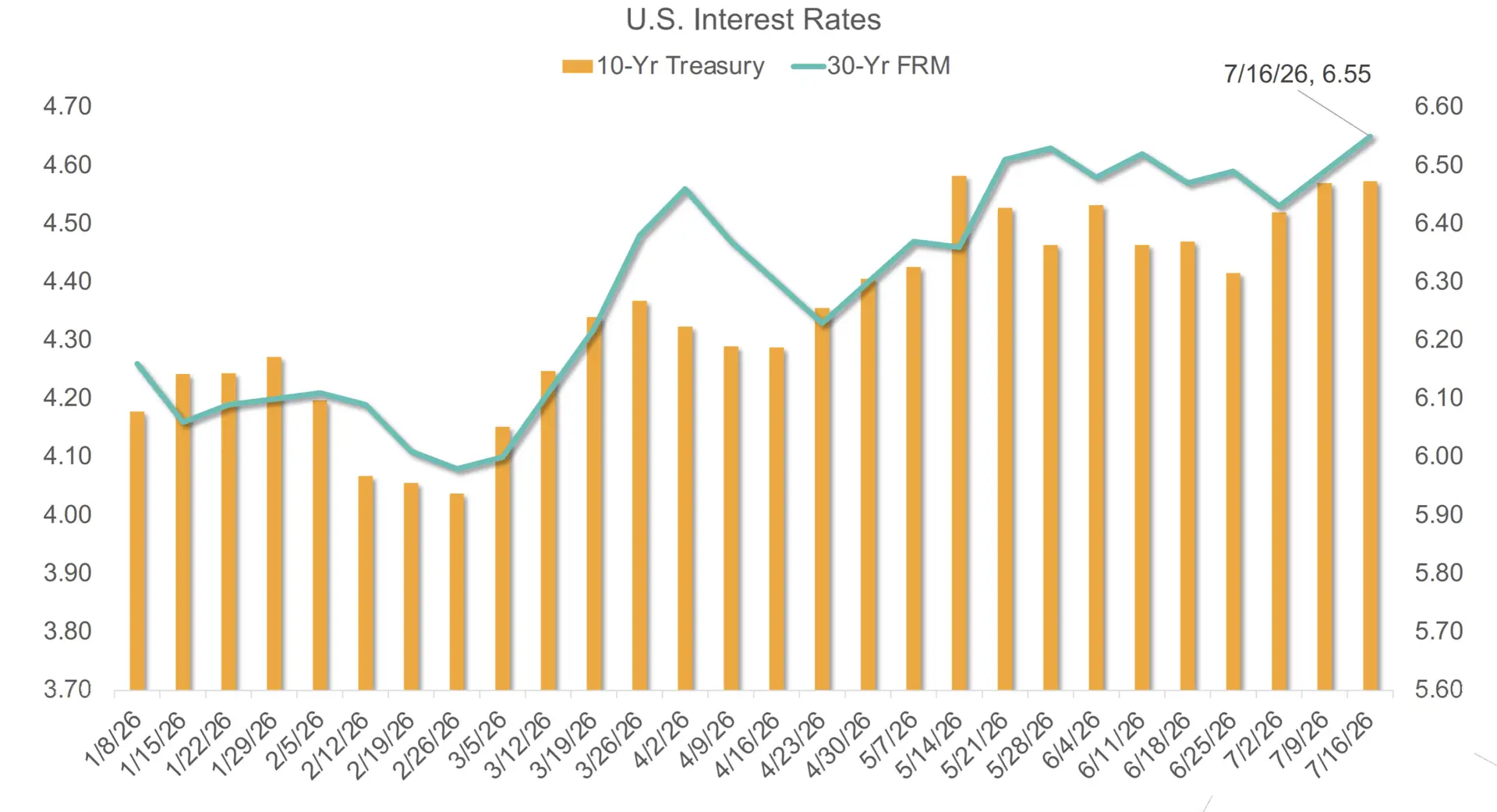
Jordan walked through the Fed’s June dot plot, which shows where each voting member of the Federal Reserve expects the Fed funds rate to be over the next several years. The picture was not encouraging if you’ve been waiting for rates to fall dramatically. The Fed still has roughly 50 basis points of planned cuts in the pipeline, same as they did in March. The timeline for getting to a steady state is now roughly twice as long as projected earlier this year.
Here’s the number that surprised me: 70 percent of the traders and investors who bet on what the Fed funds rate will be are currently betting it goes higher, not lower. These are people who get paid to be right about this. You don’t have to put a lot of weight on that, but it gives you a sense of the direction the market is leaning.
His punchline: the best realistic scenario is a return to the low 6 percent range. Not 4 percent. Not 3 percent. The 3 percent mortgages people locked in during 2020 and 2021 are not coming back in our planning horizon, and waiting for them will mean waiting a very long time.
He also made a point worth understanding: the Fed doesn’t actually set mortgage rates. Your mortgage rate is the Fed funds rate plus the 10-year treasury yield plus a risk premium that lenders charge on top of that to account for the uncertainty of lending to individual homeowners. Conditions for all three of those would have to align perfectly to get back to anything resembling the pandemic-era rates. That alignment isn’t happening.
So what does this mean practically? It means the families who are waiting for “rates to come down” before buying need to have a frank conversation about what exactly they’re waiting for, and how long they’re willing to wait for something that may not arrive.
Why the Bay Area Is Not Like the Rest of California Right Now
This was the most interesting economic framing Jordan offered, and it directly explains what I see happening in our market.
The recovery we’ve had in GDP over the last few years has come almost entirely from business investment, specifically AI data centers and hardware. That investment is concentrated in places like the Bay Area. If you work in tech or AI, your financial picture right now looks completely different from the national narrative. Jordan put it plainly: for people in that sector, “finances are better than ever.”
He called it the “K-shaped economy.” The top 20 percent of earners have captured most of the economic growth. The bottom 80 percent have largely leaned on debt to make ends meet. Consumer debt (cars, credit cards) has grown by 30 percent since the pandemic. Almost a trillion dollars in new consumer borrowing.
If you’re working in tech or AI in the Bay Area, this is your economy. Your financial picture is probably not the problem. For a lot of people reading this, the gap between where they are financially and what it takes to buy in Oakland or Berkeley is smaller than they think. In a lot of cases, the numbers work. The decision just hasn’t been made yet.
Why Inventory Stays Tight, and Why That Isn’t Changing
Here’s the clearest explanation I’ve heard for why there aren’t more homes to choose from right now.
The math is counterintuitive but real: someone who bought a $1.5M home in 2021 at 3 percent and wants to move into a $1.2M home today at 7 percent will pay more every month in the smaller, cheaper house. The rate difference swamps the price difference.
The math works the same way for every homeowner who bought or refinanced between 2020 and 2022. Moving means giving up a rate they will never see again. Moving to a cheaper home doesn’t help because it doesn’t help the monthly payment. Moving to a more expensive home is painful for obvious reasons.
The result: supply in the Bay Area is going to stay constrained. This isn’t a temporary feature of the market. It’s structural. The families with low-rate mortgages have very little financial reason to sell, and until that changes, the inventory picture doesn’t change.
The Market Is Actually Improving. You’d Never Know It From the Headlines.
Despite all of this, Jordan made clear: the market is getting better, not worse.
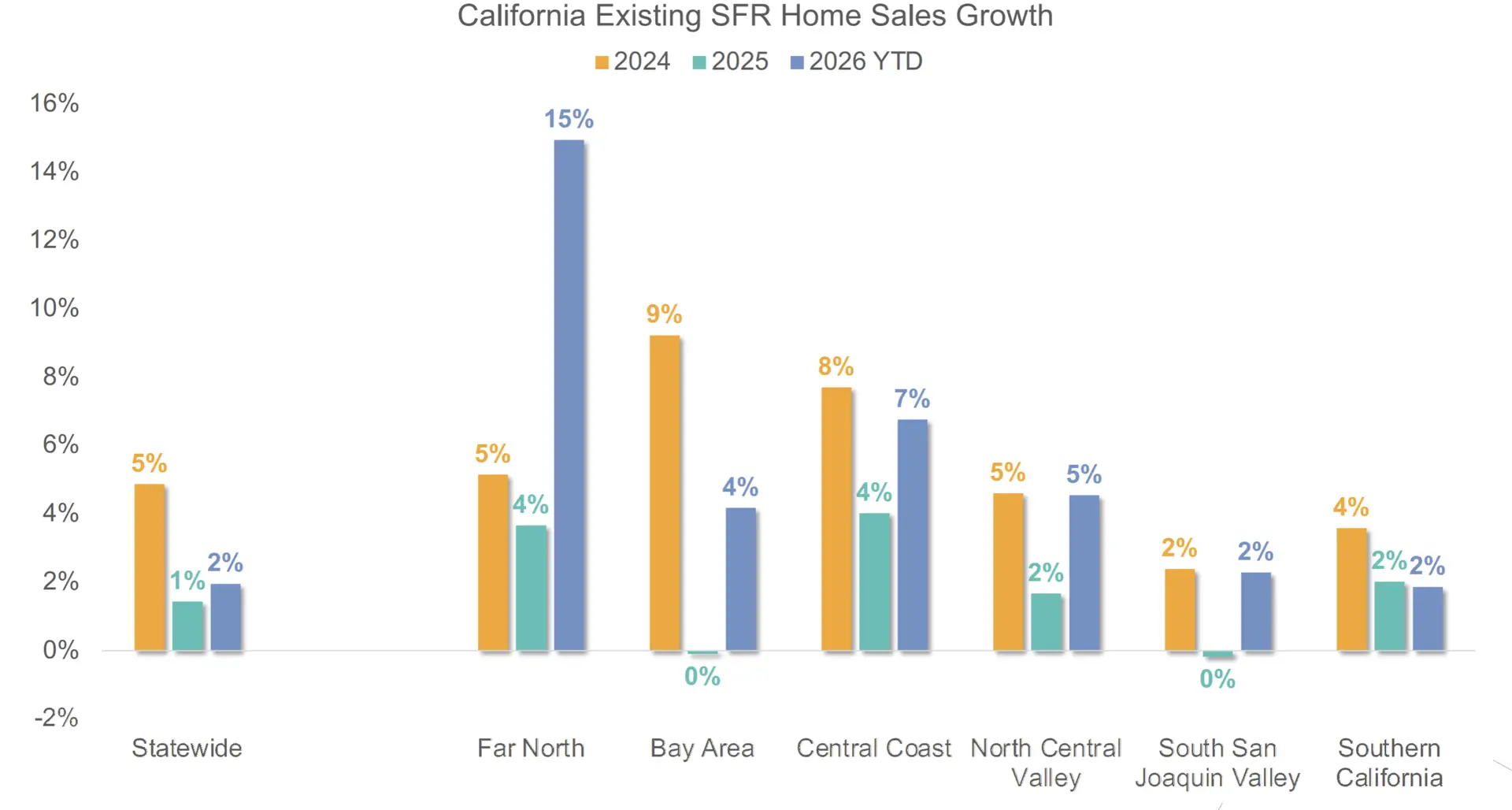
He noted that last year saw financial-crisis levels of transaction volume, even though the economy was strong and unemployment was low. People’s psychology was suppressing what should have been natural demand. This year, that’s starting to shift. The Bay Area is having a better year than it did last year. More homes are going under contract. People are moving again, adapting to the rate environment rather than waiting it out indefinitely.
If you’ve been waiting for a sign that the market is turning, this is probably it. The window between “things are getting better” and “things got competitive again” tends to be shorter than people expect.
What This Means for Families Looking in the East Bay
If you’re considering a move to Oakland, Berkeley, or anywhere in Alameda County, here’s what I took from this:
The buyers who are winning right now are the ones who stopped waiting for a perfect moment and started working toward a prepared one. Rates are what they are. Inventory is tight. The market is moving. The families who have done their preparation work, who know their numbers, who have a clear-eyed view of what they’re looking for, those are the ones who get the house.
The ones who are waiting for rates to drop to 4 percent or for inventory to flood the market are waiting for conditions that Jordan Levine, with access to every macro lever and data set, does not think are coming anytime soon.
That’s worth knowing.
If you’re not sure where to start, the preparation piece is the whole game right now. I wrote a step-by-step guide to buying a home in Oakland that covers exactly that: what to do before you talk to a lender, how to think about neighborhoods at different price points, and what the process actually looks like from offer to close. Worth a read if you’re still getting oriented.
If you’d rather talk through your specific situation, reach out. I’m happy to have that conversation.
For monthly context like this, delivered without the noise, sign up for the Wylde Market Letter below.
Jordan Levine is the Senior Vice President and Chief Economist for the California Association of Realtors. He presented to Golden Gate Sotheby’s International Realty at our company meeting on July 22, 2026.
 Follow on Instagram