The question I get at almost every open house in the East Bay hills isn’t about the kitchen or the school district. It’s about insurance. I’m glad people are asking it, because it’s the question that determines whether a house is actually affordable, and whether a deal can even close.
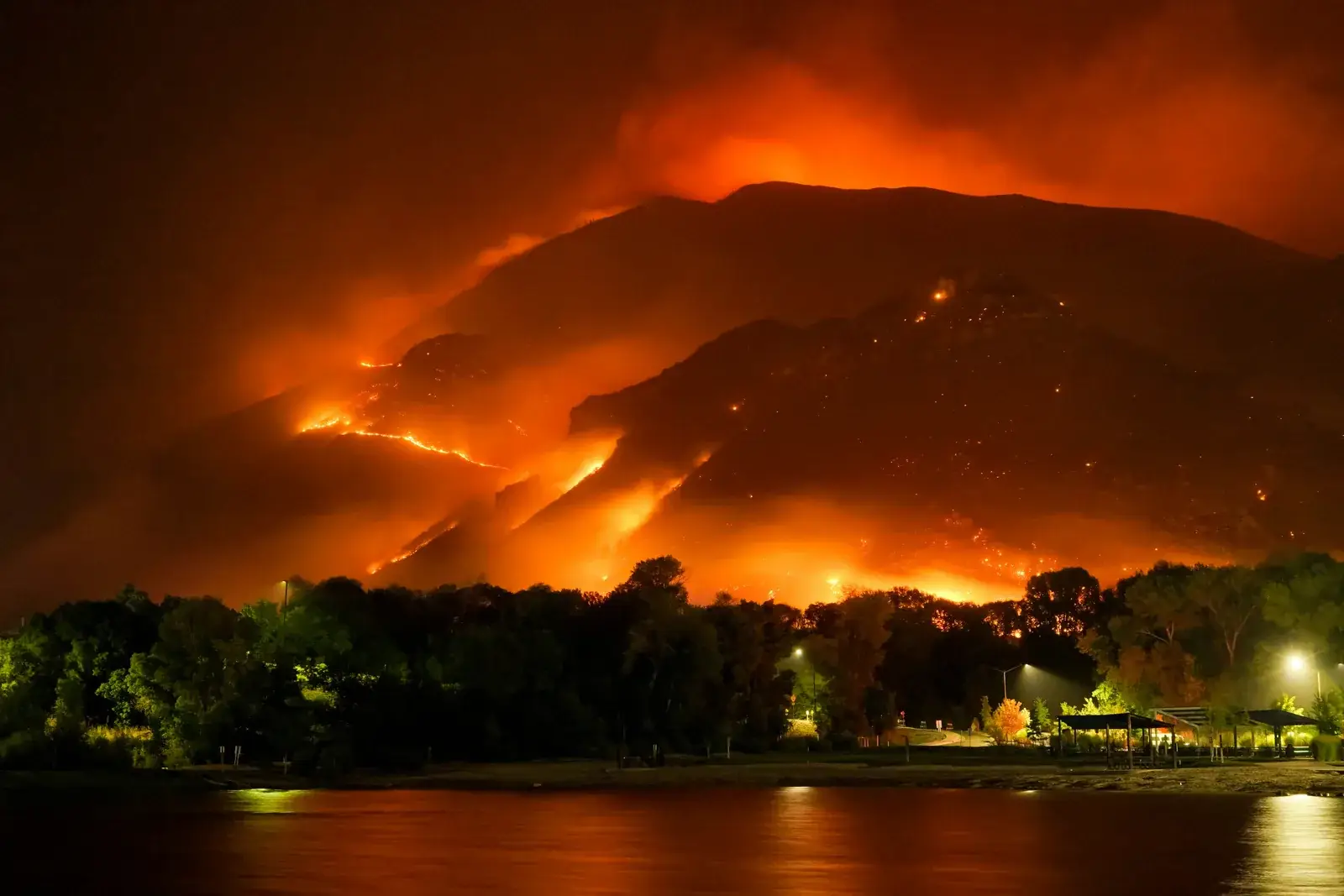
Fire insurance in Oakland and Berkeley has changed fundamentally over the last few years. The market that existed when many current homeowners bought their homes doesn’t exist anymore. If you’re buying here now, especially when the hills are involved, you need to understand how this works before you fall in love with a property. Not after you’re in contract. Before.
Here’s what I walk buyers through when it comes up.
The Market Shift Is Real, and It’s Recent
California’s homeowners insurance market has been contracting for years, but the acceleration has been sharp. According to new research from Stanford’s Woods Institute for the Environment, average California homeowners insurance premiums rose 84% between the end of 2020 and March 2026. Deductibles climbed too, from an average of $1,813 to $2,553 over the same period.
Seven of California’s 12 largest home insurers have reduced or halted new underwriting in the state. The companies that are still writing policies in the East Bay are being much more selective about where and what they’ll cover.
This matters for buyers because insurance is a closing condition. Your mortgage lender requires proof of coverage before you can close. If you find a property you love, go into contract, and discover that the only available coverage is the FAIR Plan at a cost that doesn’t work for your budget, or that your lender has requirements the FAIR Plan alone doesn’t satisfy, it’s a problem that can blow up the deal. I’ve seen it happen.
Hills vs. Flatlands: It’s More Complicated Than You Think
People often frame this as a binary: hills = hard to insure, flatlands = fine. The reality is more nuanced, and understanding the difference will help you make a more informed decision when you’re evaluating properties.
The Official Risk Map
The starting point is the Cal Fire Fire Hazard Severity Zone (FHSZ) map, the state’s official system for classifying wildfire risk. Every parcel in California is rated as Moderate, High, or Very High. The Oakland and Berkeley hills are largely designated Very High, which is the same category that triggers stricter building codes, mandatory defensible space requirements, and real estate disclosure obligations.
Berkeley goes further than the state. The city has its own hillside fire zone designations covering roughly 8,000 properties, organized into two tiers with different requirements. If you’re buying in the Berkeley hills, you’re operating under both state and city standards.
The FHSZ map is publicly accessible and address-searchable (see Resources below). It’s a useful first check. Here’s the thing: it’s not what your insurance company is actually pricing on.
The Number That Really Matters: Your Brush Score
Insurance carriers use proprietary wildfire risk scores layered on top of the official state maps. The most widely used is the Verisk FireLine score, which runs from 0 (no measurable brush exposure) to 30 (extreme risk). Similar models include ZestyAI Z-FIRE and CoreLogic.
These scores are parcel-specific. They evaluate the individual property, not just the neighborhood or ZIP code. The factors that go into them include:
- Distance to wildland vegetation and brush
- Slope steepness (fire moves faster uphill)
- Access road characteristics (width, dead ends, single-road ingress)
- Proximity to open space like Tilden Regional Park or Redwood Regional Park
- Surrounding vegetation type, including highly combustible species like eucalyptus
Most California homes (around 73% statewide) score a 0 or 1 on the FireLine scale. Homes in the East Bay hills routinely score much higher, and that number determines which carriers will write your policy and at what price. Some carriers, like Mercury Insurance, won’t write any property above a 12. Others draw their cutoffs at different points. United Policyholders documented one case of a hills home that scored a 6 (not extreme by hills standards) and received quotes of $8,000 to $10,200 per year from the two carriers willing to write it at all.
The practical reality: two homes on the same street, with nearly identical price tags and square footage, can carry completely different insurance profiles based on their individual brush scores. A home on a flat lot at the end of a wide street scores very differently from a home on a steep slope at the end of a dead-end lane, even if they’re a quarter mile apart.
How far into the hills you go matters too. As elevation increases, as slopes steepen, and as the buffer between a home and open space shrinks, brush scores generally climb. A house at the base of the hills on a grid street near Piedmont Avenue is in a different risk tier than a house above Grizzly Peak with a Tilden trailhead at the back fence. Same city. Dramatically different insurance situation.
What About the Flatlands?
Oakland and Berkeley flatlands buyers often assume they’re out of the woods. Generally, they have more options. Standard admitted carriers are more willing to write coverage in flat, urban areas, and premiums are more predictable.
There are two things flatlands buyers should know.
First, ZIP code matters. Some insurers make underwriting decisions at the ZIP code level, not just the parcel level. If your flatlands property shares a ZIP code with a high-risk hills area, some carriers may restrict or price accordingly, even if your specific address is at low individual risk. It’s worth checking before you assume you’re in the clear.
Second, the 1991 Oakland firestorm is a reminder that fire doesn’t always stay in the hills. That fire burned through 2.5 square miles of mostly residential neighborhoods, destroyed nearly 3,500 homes. Dense blocks of older wood homes with lots of vegetation can carry meaningful risk even at lower elevations, especially on dry, windy days.
If Standard Coverage Isn’t Available: The FAIR Plan
If you can’t get coverage from a standard admitted carrier, the next stop is the California FAIR Plan. Understanding what it is, and what it isn’t, is essential.
The FAIR Plan is a state-mandated insurance pool created by California law to ensure basic fire coverage remains available when private carriers won’t write a policy. It was designed as a backstop, the option of last resort. In today’s market, it has become the primary option for a significant and growing number of East Bay homeowners, through no fault of their own.
What the FAIR Plan covers: Fire, smoke, lightning, and internal explosion.
What it does not cover: Theft, water damage, liability, and most of the other protections that come standard in a traditional homeowners policy (HO-3).
This gap matters. If a pipe bursts in your FAIR Plan home and ruins two floors of hardwood, that’s not covered. If someone trips on your front steps and sues you, you have no liability protection. The FAIR Plan covers the bank’s interest in the structure. It does not fully protect you.
The DIC Policy
Most homeowners on the FAIR Plan also need to buy a Difference in Conditions (DIC) policy, a supplemental policy that fills the gaps the FAIR Plan leaves open. Water damage, theft, liability, and other standard coverages typically come through the DIC. Together, the FAIR Plan plus a DIC policy approximates what a traditional homeowners policy would provide, though the cost is higher and coverage may still be less comprehensive.
DIC premiums typically run between 25% and 60% of the FAIR Plan premium. So the real cost of being on the FAIR Plan isn’t just the FAIR Plan premium. It’s that number plus the DIC, plus the complexity of managing two policies instead of one.
A note on cost and what’s coming: The California Department of Insurance approved a 29.1% average FAIR Plan rate increase, effective October 15, 2026. For properties with high wildfire exposure, the increase applied to the wildfire portion of the premium could be steeper. This is worth factoring in when you’re running the numbers on a hills property.
What Buyers Can Do
None of this is a reason to avoid the East Bay hills. These are some of the most desirable neighborhoods in the Bay Area, and people are finding coverage and buying successfully every day. The process requires more legwork upfront. Here’s what I recommend.
- Check the property’s FHSZ designation before making an offer. The Cal Fire address lookup (see Resources) takes about 30 seconds and tells you what fire hazard zone the property sits in. If it’s Very High, factor that into your insurance research before you go deep into due diligence.
- Talk to an independent broker who specializes in high-risk properties. Do it early. Don’t wait for the home inspection. Before you remove contingencies (if you’re new to that part of the process, here’s how the Oakland buying process works), get a real quote from a broker who knows the East Bay market and works with admitted carriers, surplus-lines (E&S) carriers, and the FAIR Plan. They can tell you what’s actually available for that specific address. Berkeley FireSafe maintains an insurance resource page with guidance on finding local brokers.
- Ask about the property’s mitigation history. If a seller has documentation (Class A fire-rated roof, ember-resistant vents, cleared defensible space, Zone Zero compliance), that paperwork matters. Under California’s Safer from Wildfires regulations, insurers are required to factor documented mitigation into their pricing. A well-maintained hills property can qualify for meaningful discounts, and in some cases move from “FAIR Plan only” back to an admitted carrier. Get the documentation during due diligence.
Resources: Where to Learn More
These are the sources I trust and reference when I’m working through insurance questions with clients. They’re worth bookmarking.
- United Policyholders — The most important consumer resource on this list. United Policyholders is a San Francisco-based nonprofit advocacy organization that was co-founded in 1991 in direct response to the Oakland firestorm, and this organization knows the East Bay’s insurance history better than almost anyone. Executive director Amy Bach has been an insurance consumer advocate for over 40 years. Their site includes a non-renewal guide, a broker directory, and East Bay-specific resources. If you get a non-renewal notice or are struggling to find coverage, start here.
- Berkeley FireSafe — A local community organization focused on wildfire preparedness in the Berkeley hills. Their insurance resources page is one of the most practical and hyper-local guides available, including information on broker referrals, understanding your fire risk score, and what mitigation work actually counts with insurers. If you’re buying in Berkeley, this is essential reading.
- Oakland Firesafe Council — The Oakland-focused equivalent. Monitors local fire hazard zone changes, provides preparedness resources, and is a good source for staying current on how Cal Fire’s evolving FHSZ maps apply specifically to Oakland neighborhoods.
- Cal Fire FHSZ Address Lookup — The official state tool for checking any California address’s Fire Hazard Severity Zone designation. Free, fast, and a useful first step for any East Bay hills property. Note: this shows the regulatory classification, not the insurer’s proprietary brush score, but it’s a solid starting point.
- California Department of Insurance — The state regulatory authority. Their website has plain-language explanations of the FAIR Plan, non-renewal rights, the Safer from Wildfires discount program, and how to file a complaint if you’re treated unfairly by a carrier. The Safer from Wildfires page is worth reading if you own or are buying a hills property and want to understand what mitigation investments actually qualify for insurance discounts.
- Stanford Woods Institute for the Environment — For readers who want the data behind the data. Researcher Michael Wara and his team have published some of the most rigorous analysis of California’s insurance crisis, including the finding that average premiums rose 84% between 2020 and early 2026. Their work is a useful counterweight to the insurance industry’s messaging and the state’s at times optimistic framing.
The Bottom Line
Fire insurance in the East Bay isn’t a formality. It’s part of the true cost of owning a home here, and it varies significantly based on where you are, how that specific parcel scores on the wildfire risk models insurers use, and what condition the home is in.
The buyers who navigate this well are the ones who ask about it early. Not after they’ve fallen in love with a house, but while they’re still doing the work of figuring out whether it’s the right move. That’s what I’m here to help you think through.
If you’re looking at a property in the hills and want to talk through what the insurance picture might look like, reach out. It’s one of the most important conversations to have before you write an offer. You’ll find my contact information and newsletter signup below.
Keep Reading
- How to Buy a Home in Oakland: A Step-by-Step Guide for 2026 — Insurance is one piece of the picture. Here’s a full walkthrough of what the Oakland buying process actually looks like from offer to close, including contingencies, timelines, and what surprises buyers most.
- The Oakland Market in 2026: What the Data Actually Says — If you’re trying to understand where the East Bay market stands right now, this is the post to read first. It covers median prices, days on market, and the segment-level dynamics that determine how competitive your search is going to be.
 Follow on Instagram