Rockridge or Montclair? Here’s How to Actually Decide.
You’ve been to open houses in both neighborhoods. In Rockridge, you walked out the door of a 1920s Craftsman and straight onto College Avenue, coffee shop to your left, wine bar to your right, BART three blocks down. In Montclair, you stood on a deck surrounded by redwoods, looked out over the Bay, and thought: I could actually live here.
Now you’re staring at two browser tabs and you can’t decide.
I hear this comparison constantly from buyers in Oakland’s hills. And the thing is, Rockridge and Montclair aren’t really competing on price. They’re competing on lifestyle. The question isn’t which one is better. It’s which one fits how you actually want to live.
Let me break it down.
The Basics, by the Numbers
Both neighborhoods are competitive, and neither is a bargain by any definition. According to Bay East MLS data for Q2 2026, Rockridge has a median sold price around $1.9 million, with homes moving in roughly 21 days and inventory that runs historically thin (we’re sometimes talking five new listings in a month). Montclair’s median lands in the $1.3M to $1.6M range depending on location, with homes typically going under contract in 17 to 33 days, usually above asking.
Rockridge runs higher overall, but Montclair has a wider spread. Entry-level homes in Montclair, smaller footprint, no view, start in the mid-$800s. Premium view lots push past $2 million. In Rockridge, you’re almost always competing in the $1.2M to $2.5M range regardless of condition, because the location premium is baked into the address.
What this means practically: if you have flexibility across price points, Montclair gives you more options. If you’ve targeted a specific Rockridge block near College Avenue, you’re in a tighter, more compressed market where preparation and speed matter more than almost anything else.
What Rockridge Actually Gives You
Rockridge is the definition of a walkable urban neighborhood. College Avenue runs through the heart of it, lined with restaurants, coffee shops, wine shops, bookstores, and markets you can actually reach on foot without planning an errand. The Rockridge BART station puts you on a train to downtown San Francisco in about 25 minutes. If you or your partner commutes to the city, that’s a real daily quality-of-life factor, not just a checkbox.
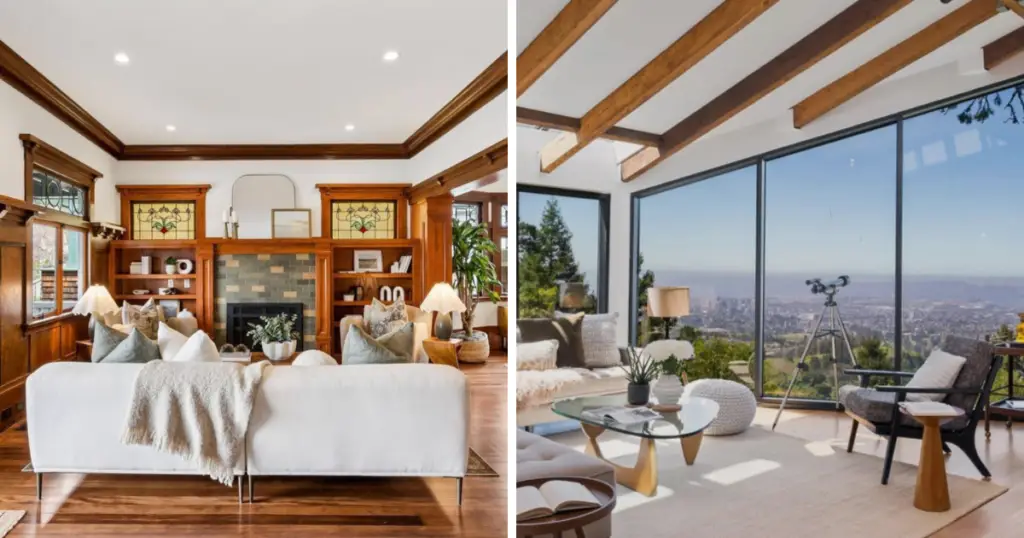
The homes are predominantly Craftsman bungalows built between 1910 and 1930, which means original hardwood floors, period details, built-in bookshelves, and the kind of character that doesn’t come from a renovation. The flip side: older homes mean deferred maintenance, smaller closets, and disclosures that require careful reading. You need a buyer’s agent who knows this inventory, not just someone pulling comps from a portal.
The buyer pool in Rockridge is deep and moves fast. Homes that show well and are priced accurately attract multiple offers, often before the first weekend is over. If you want Rockridge, you need a clear offer strategy before you step foot in your first open house.
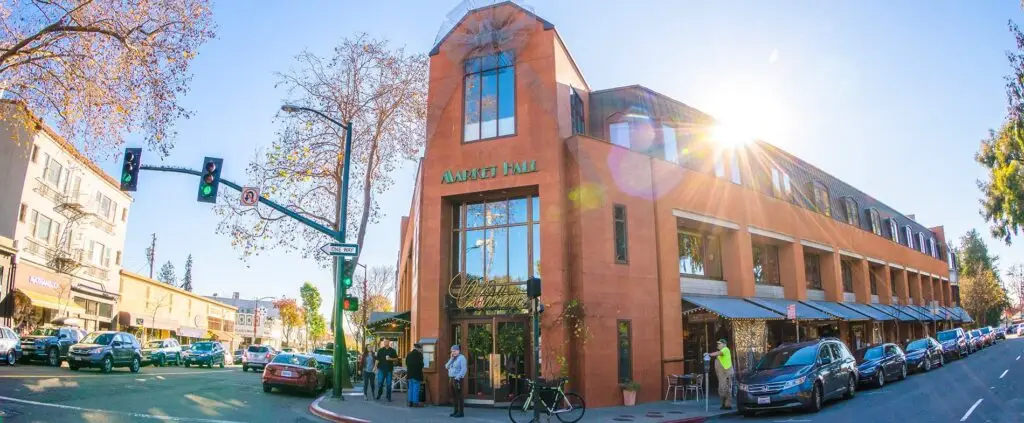
Want to get a feel for it before you commit to a full weekend of opens? Start with coffee at High Wire, then walk College Avenue and see how it sits. Pick up lunch at Southie, wander into Maison d’Être and Nathan & Co, and end the day at Ramen Shop for dinner. On Sunday mornings, the Temescal Farmers Market takes over the DMV parking lot and gives you a good read on the neighborhood’s energy. Market Hall is worth a stop any day of the week — pick up prepared foods, grab something from the cheese counter, or just wander. You’ll know by noon whether this neighborhood is yours.
What Montclair Actually Gives You
Montclair is a hillside neighborhood, and that’s not just geography. It’s a lifestyle orientation. The streets wind through trees. You need a car for most errands, though there’s an AC Transit bus connecting to BART, and a Transbay Express option for SF commuters. Montclair Village, the neighborhood’s compact commercial center on Moraga Avenue, has everything you need for a Saturday morning but it isn’t the kind of walkable daily-driver scene that College Avenue is.
What you get in exchange: space, air, quiet, and access to some of the best trails in the East Bay. Redwood Regional Park is right there. So is Joaquin Miller Park. If you have a dog, kids who actually play outside, or you just want to decompress after a week of screens, Montclair delivers in a way Rockridge simply can’t.
The homes are a wider mix than Rockridge. Mid-century ranches, Spanish Colonials, newer construction, and everything in between. It’s a neighborhood where people settle in and stay. The homeownership rate is around 84 percent, and the median age skews older than Rockridge, which tells you something about who’s choosing it and why.
Want to get a feel for it before you commit to a full weekend of opens? Start with coffee at Yellow Door, then head up into Joaquin Miller Park for a morning hike. Come back down to Montclair Village for dinner at Payakk, which has been getting the write-ups it deserves. On Sundays, the farmers market sets up in the village and draws a crowd. Stop into Farmstead Cheese and Wine before you head home. If the pace of a weekend in Montclair feels right, the neighborhood probably is too.

Schools
Schools come up constantly in these conversations, so let me be direct.
Montclair Elementary is one of Oakland Unified School District’s most highly rated elementary schools and a genuine driver of buyer demand in the neighborhood. From there, kids typically move to Montera Middle and Skyline High. Private options nearby include Head-Royce, Bentley and College Preparatory.
Rockridge is served by different OUSD schools depending on the specific block, and many families in this zone explore private options, particularly at the middle and high school level. If school assignment is a primary driver for your search, verify the specific catchment for any listing you’re seriously considering. Boundaries can shift, and this is not a detail to assume.
The Commute Question
This one often decides it.
If you’re commuting to San Francisco by BART, Rockridge wins clearly. The station is walkable from most of the neighborhood and the ride downtown is fast and direct.
Montclair is more commuter-flexible than people assume. Highway 13 connects quickly to I-580 and I-880, which works well for anyone heading to East Bay offices. The Transbay Express bus provides a real SF option for commuters who’d rather not drive to BART. But if you’re picturing yourself walking to the train in the morning, Montclair is not that neighborhood.
So Which One Is for You?
Here’s the shorthand I’ve landed on after spending a lot of time in both neighborhoods, studying the market data, and going to more open houses than I can count.
Choose Rockridge if: walkability is non-negotiable, you’re a BART commuter, you love period architecture, and you want to be embedded in a lively neighborhood where coffee, dinner, and the farmers market are all within a few blocks of your front door.
Choose Montclair if: you want more space and breathing room for your dollar, outdoor access is part of how you decompress, you commute by car or bus, and you’re drawn to a quieter residential rhythm with a tight-knit village feel.
Neither answer is wrong. They’re genuinely different neighborhoods that attract different kinds of people, and both have real things to offer. The honest complication is that both markets move quickly and reward buyers who have done their homework before the listing goes live.
If you’re actively comparing these two and want to talk through what’s realistic in your range right now, reach out. That conversation is free and usually takes about 30 minutes. Or if you want this kind of data showing up in your inbox every month, sign up for the Wylde Market Letter below.
Market data sourced from Bay East MLS, Q2 2026. School information reflects current OUSD assignments and is subject to change. Verify catchment boundaries directly with OUSD before making decisions based on school access.
 Follow on Instagram